Free to use, no sign-up

Look up a home before you buy

Pop in a postcode and pick the home. See what it sold for, its energy certificate, the flood areas and planning protections around it and the crime recorded nearby.

Built on Land Registry, EPC, police and planning data

England and Wales only: Scotland and Northern Ireland keep their own records.

What the lookup shows you

The things worth knowing before a viewing, in one place, each from the people who publish it.

  1. What it sold for Every registered sale since 1995, and what the house price index says about the last one today.
  2. Its energy certificate The rating, the assessor's running costs and the improvements that would lift it.
  3. What's around it Flood areas, planning protections like conservation areas, and the crime police.uk recorded nearby.

Questions people ask

Where does all this come from?

Official open data: HM Land Registry's sold prices and house price index, the EPC register, the Environment Agency, the government's national planning data and police.uk. Each part names its source, and the small print at the bottom carries each one's credit.

Why can't I find the home?

A home shows up here if it's sold since 1995 or has an energy certificate. Plenty haven't done either. Press "just show the postcode" to see what's around it anyway.

Is the price figure a valuation?

No. It's the last sale moved with the house price index, the same sum as our house price calculator. It can't see the home's condition or anything done to it since, so ask a surveyor or an agent for a figure you can rely on.

How exact are the crime figures?

Not very, on purpose. police.uk places each crime at an approximate spot to protect the people involved, so the figures describe the area around the postcode rather than any street or home.

Does a protection mean I can't change anything?

Not necessarily. A conservation area or an article 4 direction can limit what changes without planning permission, especially outside. The council decides, so ask its planning team about anything you have in mind. The national planning data doesn't cover every council yet either.

Do you keep the home I looked up?

No. We fetch the answers, show them to you and keep none of it about you. We don't ask who you are either.

About this lookup

Everything on this page comes from official open data, as its publishers released it. We add the layout and, for the last sale, the house price index's sum. Sales cover England and Wales since 1995, energy certificates are the assessor's, and the planning data doesn't cover every council yet.

It isn't a valuation, a survey or a legal search. For a purchase, your conveyancer's searches and a survey are what to rely on.

Sources

HM Land Registry Price Paid Data: Contains HM Land Registry data © Crown copyright and database right 2021. This data is licensed under the Open Government Licence v3.0.

UK House Price Index: Contains HM Land Registry data © Crown copyright and database right 2020. This data is licensed under the Open Government Licence v3.0.

Energy Performance of Buildings Register: Contains data from the register, licensed under the Open Government Licence v3.0. Address data © Ordnance Survey and Royal Mail Group Limited, who reserve all their respective copyright, database rights, trademarks and other intellectual property rights; shown under the register's copyright notice to help people understand the energy efficiency of homes.

Environment Agency flood areas: this uses Environment Agency flood and river level data from the real-time data API (Beta).

Postcode lookups by postcodes.io: Contains OS data © Crown copyright and database right 2026. Contains Royal Mail data © Royal Mail copyright and database right 2026. Contains GeoPlace data © Local Government Information House Limited copyright and database right 2026. Source: Office for National Statistics licensed under the Open Government Licence v.3.0.

Crime data from police.uk: Contains public sector information licensed under the Open Government Licence v3.0.

Planning data from planning.data.gov.uk: © Crown copyright and database right 2026. Licensed under the Open Government Licence v3.0.

Historic England, via planning.data.gov.uk: © Historic England 2026. Contains Ordnance Survey data © Crown copyright and database right 2026. The Historic England GIS Data contained in this material was obtained on 4 Oct 2026. The most publicly available up to date Historic England GIS Data can be obtained from HistoricEngland.org.uk.

Natural England, via planning.data.gov.uk: © Natural England copyright. Contains Ordnance Survey data © Crown copyright and database right 2026.

Green belt, via planning.data.gov.uk: Contains Ordnance Survey data © Crown copyright and database right 2026.

Reading to go with it

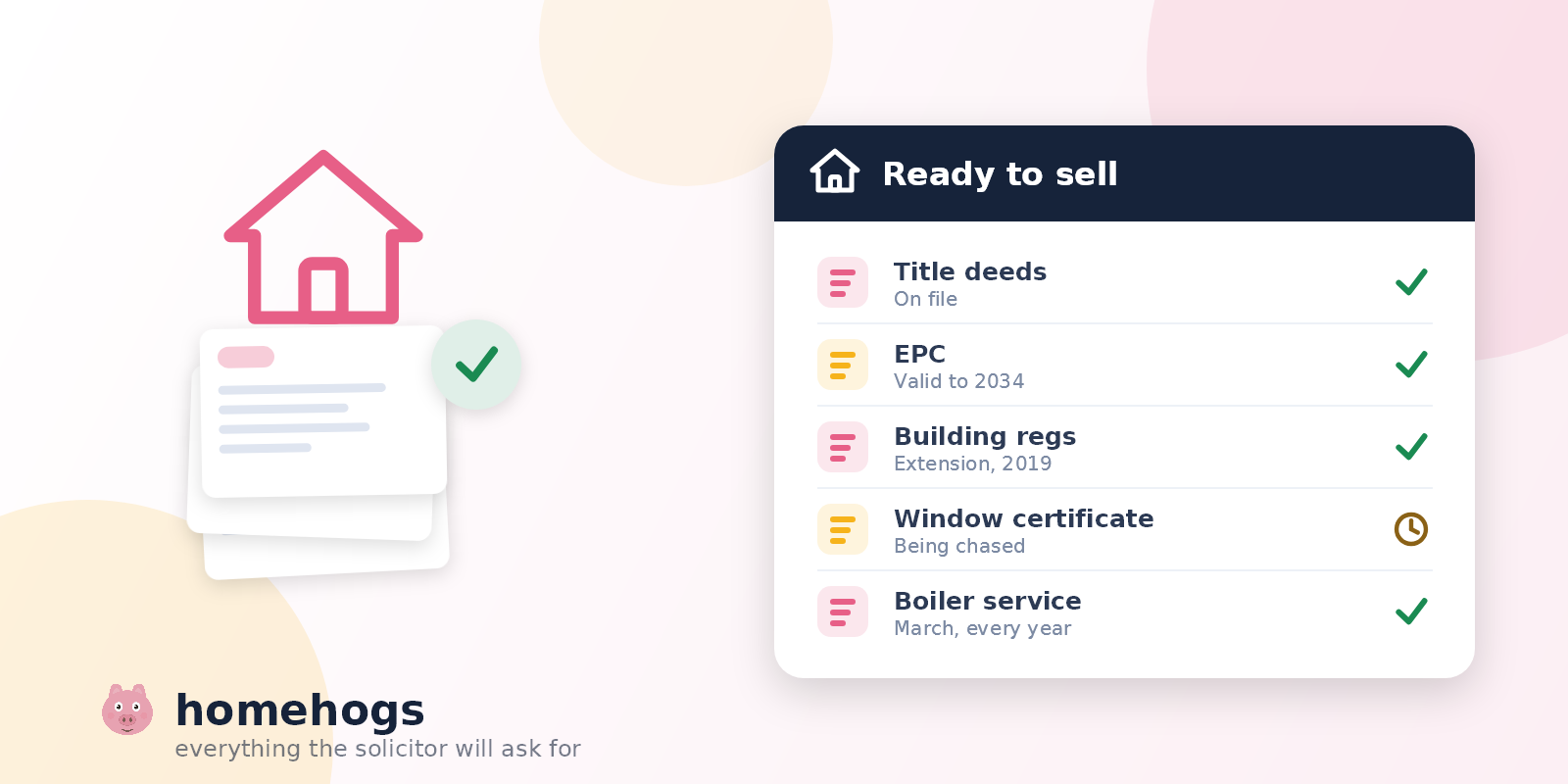
A house sitting on a neat stack of property documents, next to a checklist showing title deeds, an energy certificate and building regulations paperwork all present, with a window certificate still outstanding.
Buying and Selling· · 7 min read

What Documents Do You Need to Sell a House in the UK?

Most delays in a house sale are not caused by the buyer, the survey or the lender. They are caused by a document nobody can find. This is the full list of what a buyer's solicitor will ask for, what each one actually proves and what to do when one has gone missing.
What Documents Do You Need to Sell a House in the UK?
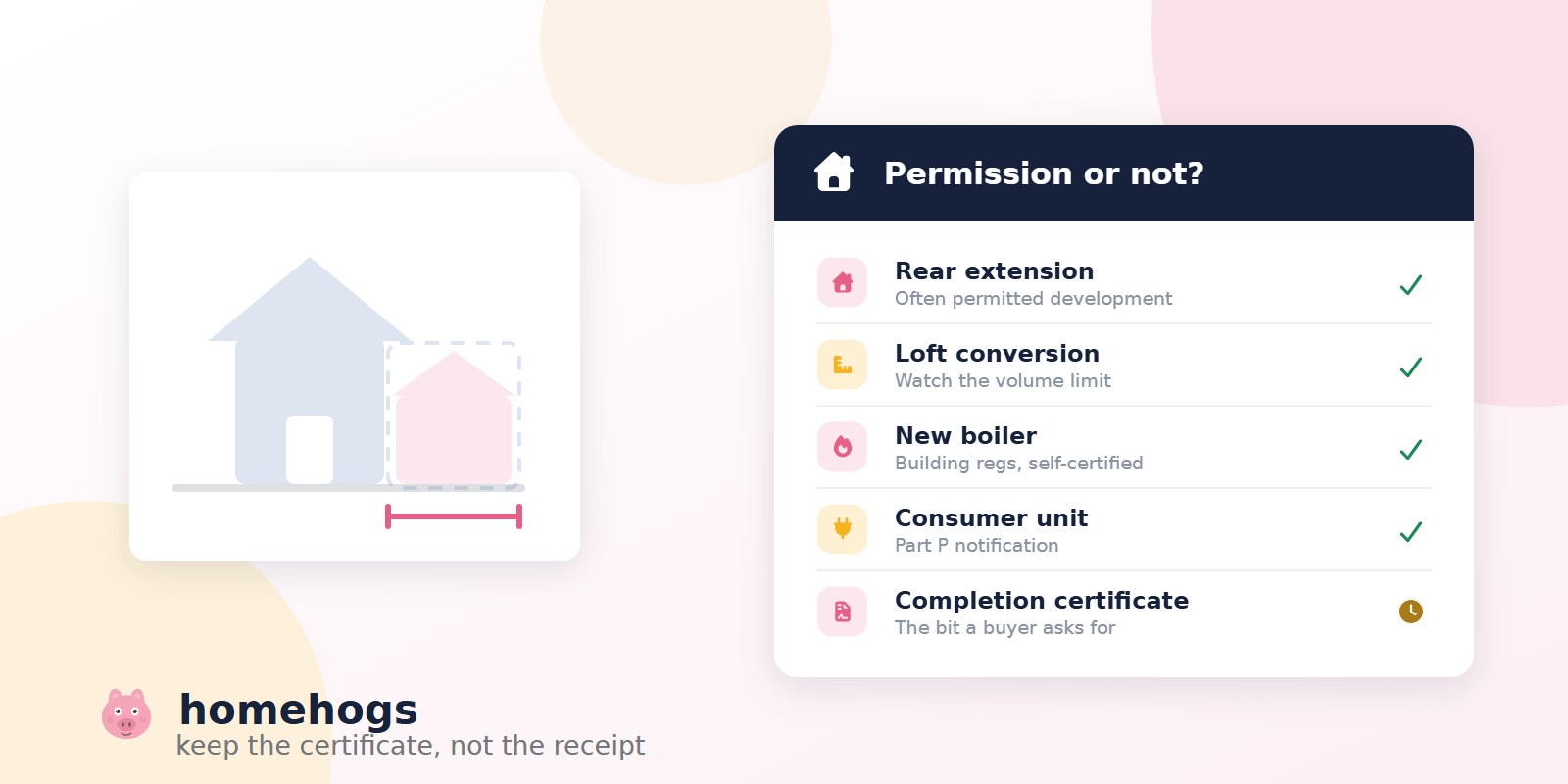
A house in elevation with an extension drawn beside it inside a dashed outline, next to a list of common jobs and whether each needs planning permission or building regulations.
Home Maintenance· · 7 min read

Planning Permission or Building Regulations? Which One Your Job Needs

Planning permission and building regulations are two separate systems asking two different questions. A job can need one, both or neither. This is how to tell them apart, which one produces a certificate and why a buyer will ask you for it years later.

Planning Permission or Building Regulations? Which One Your Job Needs
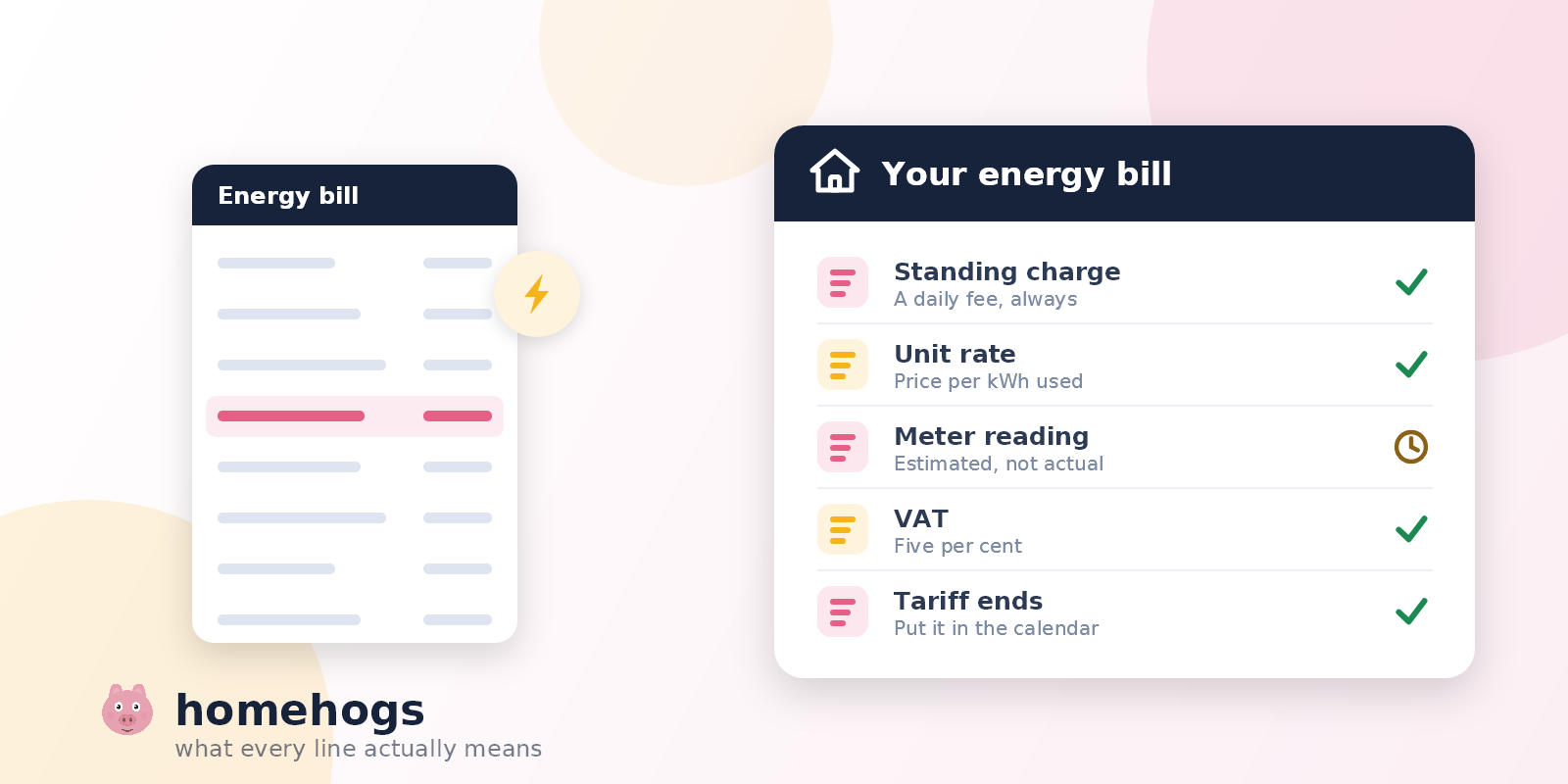
An energy bill with one line picked out in pink, beside a panel explaining the standing charge, the unit rate, the meter reading, VAT and the tariff end date.
Bills and Energy· · 7 min read

How to Read Your Energy Bill and Spot When It Is Wrong

Energy bills are written for the supplier's billing system rather than for the person paying them. This is what every line actually means, which numbers are worth your attention and the handful of checks that catch a bill charging you for energy you did not use.

How to Read Your Energy Bill and Spot When It Is Wrong

More free tools