A car comes with a service history and a house comes with a carrier bag, if you are lucky. Almost all of what is missing can be recovered from registers you are allowed to search yourself, for very little money. This is the order to work through them in.
Buy a ten year old car and it comes with a folder. Stamps, dates, receipts, an MOT history you can look up on your phone in about eight seconds.
Buy a hundred year old house and you get a carrier bag with a boiler manual in it, if the last owner was organised. Nobody thinks this is strange. It is extremely strange.
The good news is that a surprising amount of your house's history already exists in somebody else's records. It is just scattered across half a dozen places, none of which will ever send it to you. Most of it is free, the rest comes to about thirty pounds and you can do the bulk of it in an evening.
The short version
- Start with your own conveyancing file, which is usually the single biggest haul
- The EPC register and your council's planning register are free and searchable by address
- Gas Safe holds notifications of boiler installations and will sell you a replacement certificate for under a tenner
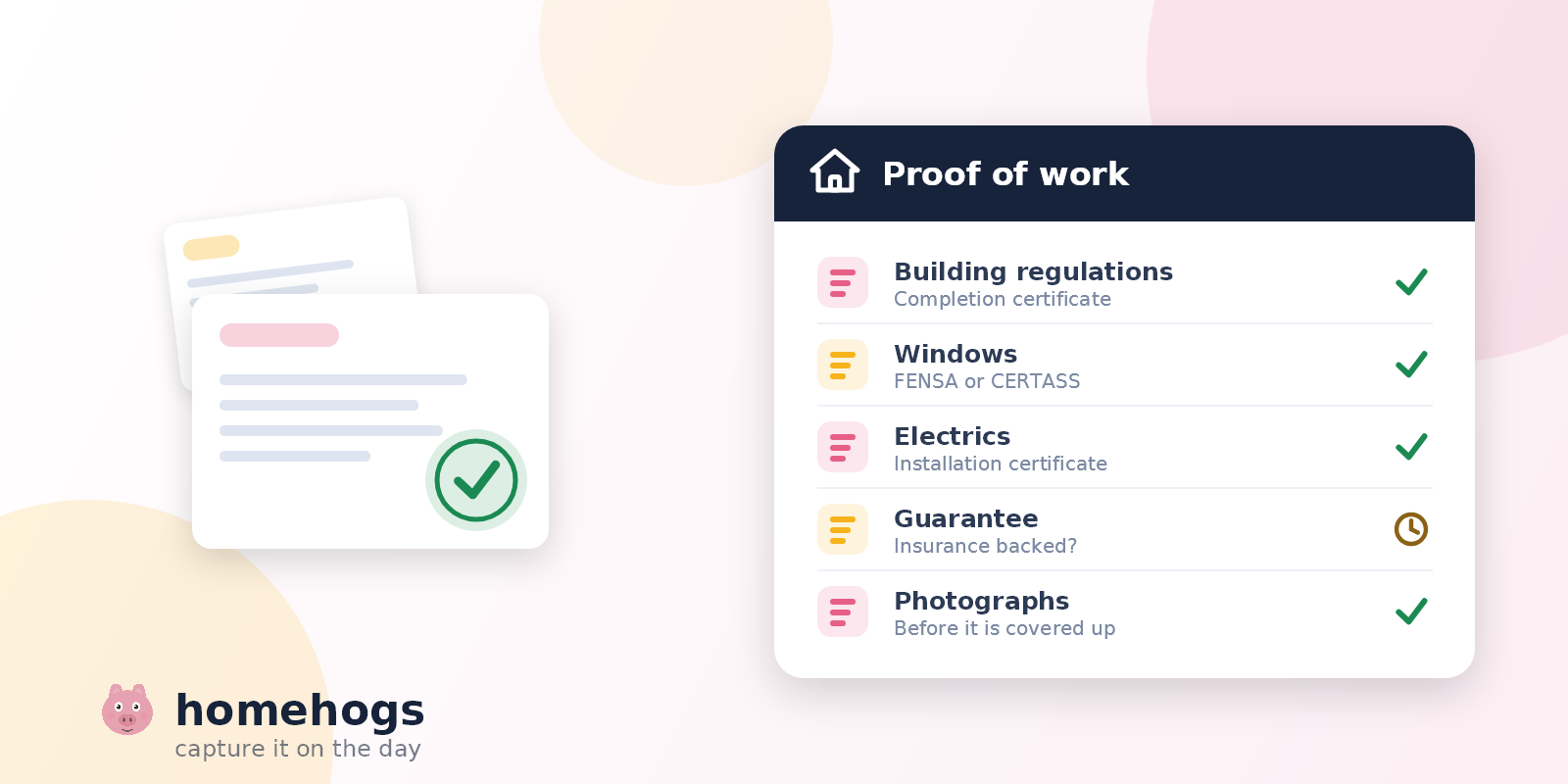
- FENSA and the other installer schemes can reissue window and door certificates
- The title register from HM Land Registry is £7 and carries the covenants, the rights of way and the price paid
- Photograph the things that have no paper at all and write down what you could not find
Start with what is already in the house
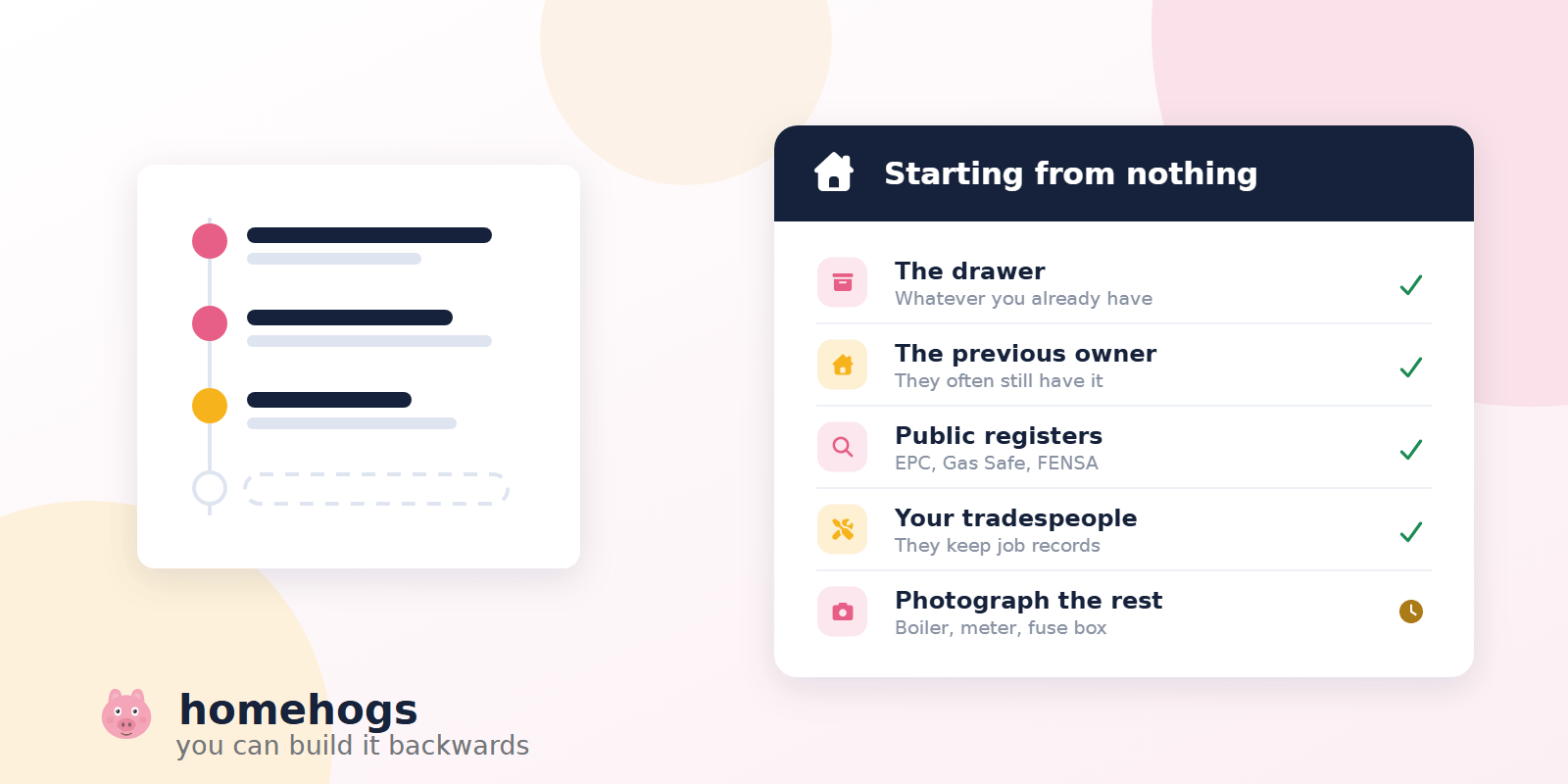
Before paying anybody for anything, empty the drawer. All of it, onto a table.
You are looking for four kinds of thing. Certificates, which are the valuable ones. Manuals, which tell you the make, model and often the installation date of everything fixed. Invoices, which are weaker evidence but tell you who did what and when. And anything with a company name on it, because a name is a thread you can pull.
Then look at the house itself. The boiler has a data plate with the make, model, GC number and serial number on it, usually behind the front panel or on the underside. The consumer unit often has a sticker from whoever installed it, with a date and a phone number. Windows frequently carry a small etched or printed mark in a corner of the glass unit giving the manufacturer and the year. Meters have serial numbers. Radiators, thermostats and extractor fans all have model numbers.
Photograph the lot. It takes twenty minutes and it converts a house full of anonymous equipment into a list you can actually work with.
The registers you can search yourself
This is where most of the recovery happens.
The EPC register is free at the government's Find an Energy Certificate service. Search by postcode and you get the current certificate and often earlier ones, each with its recommendations. Two EPCs a decade apart is a small piece of history in itself: it shows what changed.
Your council's planning register is free, online and usually goes back decades. Search by address and you will find applications, decisions and often the drawings. This is how you discover that the odd step in the hallway is where a 1987 extension met the original house.
Building control records are held by the council too, though they are less consistently online and there is sometimes a fee. Worth asking for if the planning register shows work that would have needed sign off.
Gas Safe keeps notifications of heat producing appliances installed by registered engineers, because they notify building control on the installer's behalf. If your boiler's Building Regulations Compliance Certificate has gone missing, they will issue a replacement, which at the time of writing costs £7.92.
FENSA will search for and reissue a certificate for replacement windows and doors, currently £25 online. Certass does the equivalent for its own installers.
HM Land Registry sells the title register for your property for £7. It tells you who owns it, what covenants and rights of way sit on it and what was paid if the last sale was since 2000. Well worth having even when nothing is in dispute.
Ask the people who did the work
Two groups of people know things about your house that you do not.
The previous owner, if you are on any sort of terms. Estate agents will sometimes pass on a message. It costs nothing to ask and people are usually rather pleased to be asked. What you want is not a conversation about the kitchen, it is the boiler's installer, who did the roof and whether the loft insulation was grant funded.
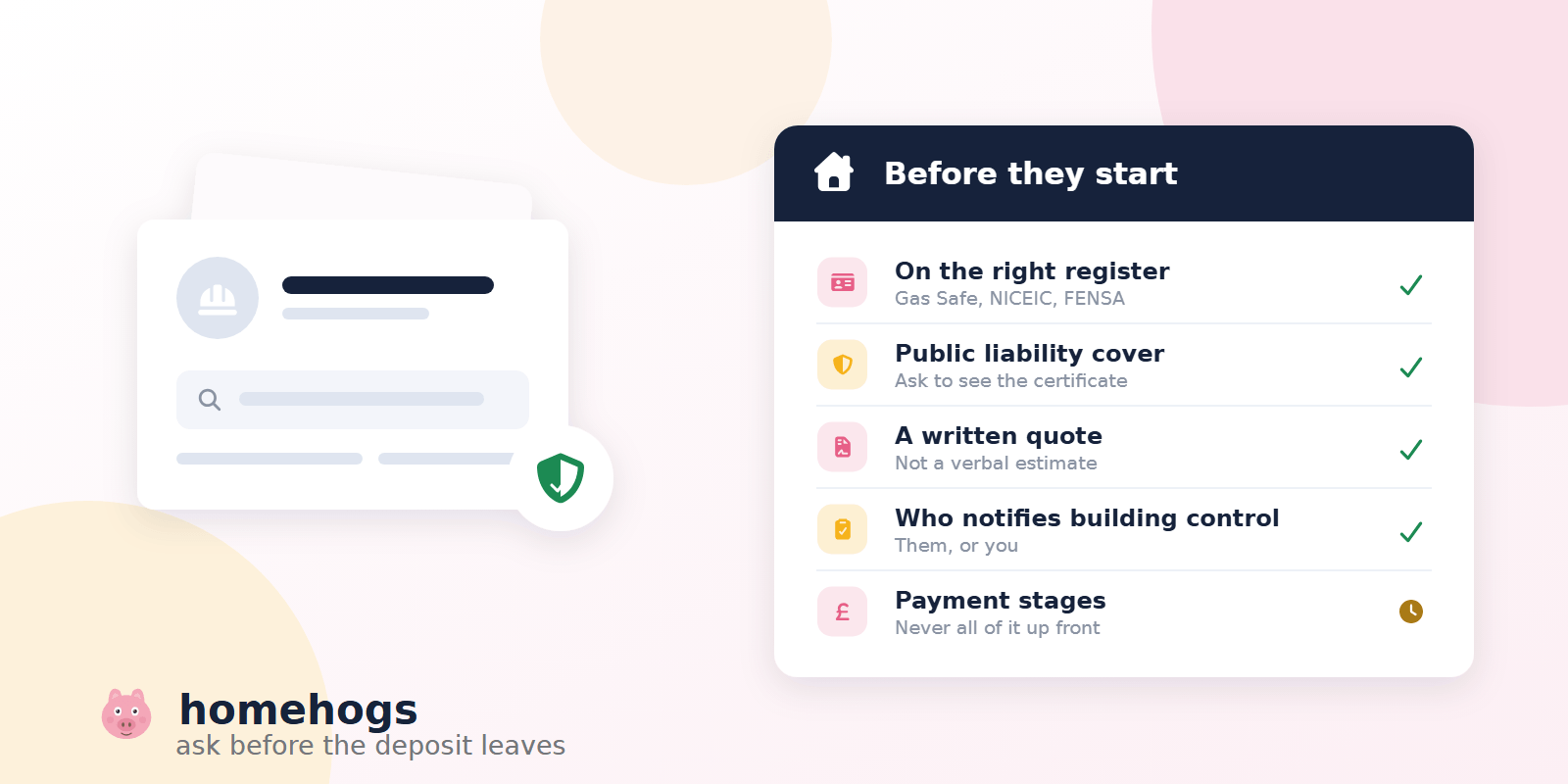
The trades themselves. Plumbers, electricians and roofers keep job records, often for years. A good one will happily send you a copy of an old certificate or invoice. Registered installers have to keep certification records for their scheme anyway, so the paperwork exists whether or not they can find it quickly.
If a company has closed, the scheme it belonged to may still hold the certification. That is the whole point of a scheme: the record outlives the business.
Photograph what has no paper at all
Some things will never produce a document and are still worth recording.
Where the stopcock is and whether it turns. Where the gas meter and the electricity meter are, with their serial numbers. Which way the fuse board is laid out, photographed with the labels legible. The make and colour code of the paint, which lives on the tin, which is in the garage, which will be thrown out one day.
Then there is the buried infrastructure. If a floor ever comes up or a wall gets opened, photograph the pipe runs and cable routes before they disappear again. This is the single most useful photograph anybody ever takes of their house. It takes four seconds. Nobody does it, then somebody drills through a pipe.
Then stop doing archaeology
The reconstruction is a one off job. Keeping it up is not. The whole thing falls apart the moment you go back to putting paperwork in the drawer.
One rule covers it: the record gets made at the moment of the work, not later. Photograph the certificate when the engineer hands it over. Note the company name while the van is still outside. Write down what it cost while you still remember whether that included the parts.
Do that and in ten years you own something almost no house in Britain has, which is a property with a service history. It saves you money on the day something breaks, because you know what it is and who fitted it. And it does something for you when you sell, because a buyer's solicitor asking a question you can answer with a document is a question that does not become a delay.
That last part is what the whole digital logbook idea is built on. It is also why proving work was done is worth more than remembering that it was.
Somewhere to put it all
homehogs holds the certificates, the appliances, the work and the gaps in one place, so the evening you spend rebuilding your home's history is the last one you have to spend on it.
Join the waiting list