A week-by-week checklist for selling a house in England or Wales, from twelve weeks before you list to the day you hand over the keys. It covers the paperwork, valuations, choosing an agent and a conveyancer, the EPC, small repairs, leasehold packs, your mortgage and what to keep afterwards.
The best time to prepare a house for sale is before anyone sees it. This checklist starts twelve weeks before you list: gather the paperwork, check your mortgage, get the EPC, fix the small things a buyer's survey would pick up, get valuations from more than one agent and choose an agent and a conveyancer. Then it carries on from listing day to the day you hand over the keys.
The weeks are a guide, not a rule. If you need to move faster, do the same steps closer together. What matters is the order: paperwork and numbers first, presentation second, the listing last. GOV.UK says a sale takes about five months on average, so the time you spend now is time a buyer isn't left waiting later.
This covers England and Wales. Scotland and Northern Ireland have a short section at the end.
The short version
- Start about 12 weeks before you list, because replacing a lost certificate or ordering a leasehold pack can take weeks
- You must order an EPC before the home is marketed; a valid one lasts ten years and may already be on the register
- Get valuations from at least three agents and check their figures against what similar homes nearby actually sold for
- The Law Society encourages sellers to instruct a conveyancer as early as possible, ideally before marketing
- Check what you owe, any early repayment charge and whether your mortgage can move with you before you set a price
- Expect ID checks from your agent, your conveyancer and any lender; keep your buildings insurance until completion
- An offer isn't legally binding in England and Wales until contracts are exchanged
12 to 10 weeks before: paperwork and numbers
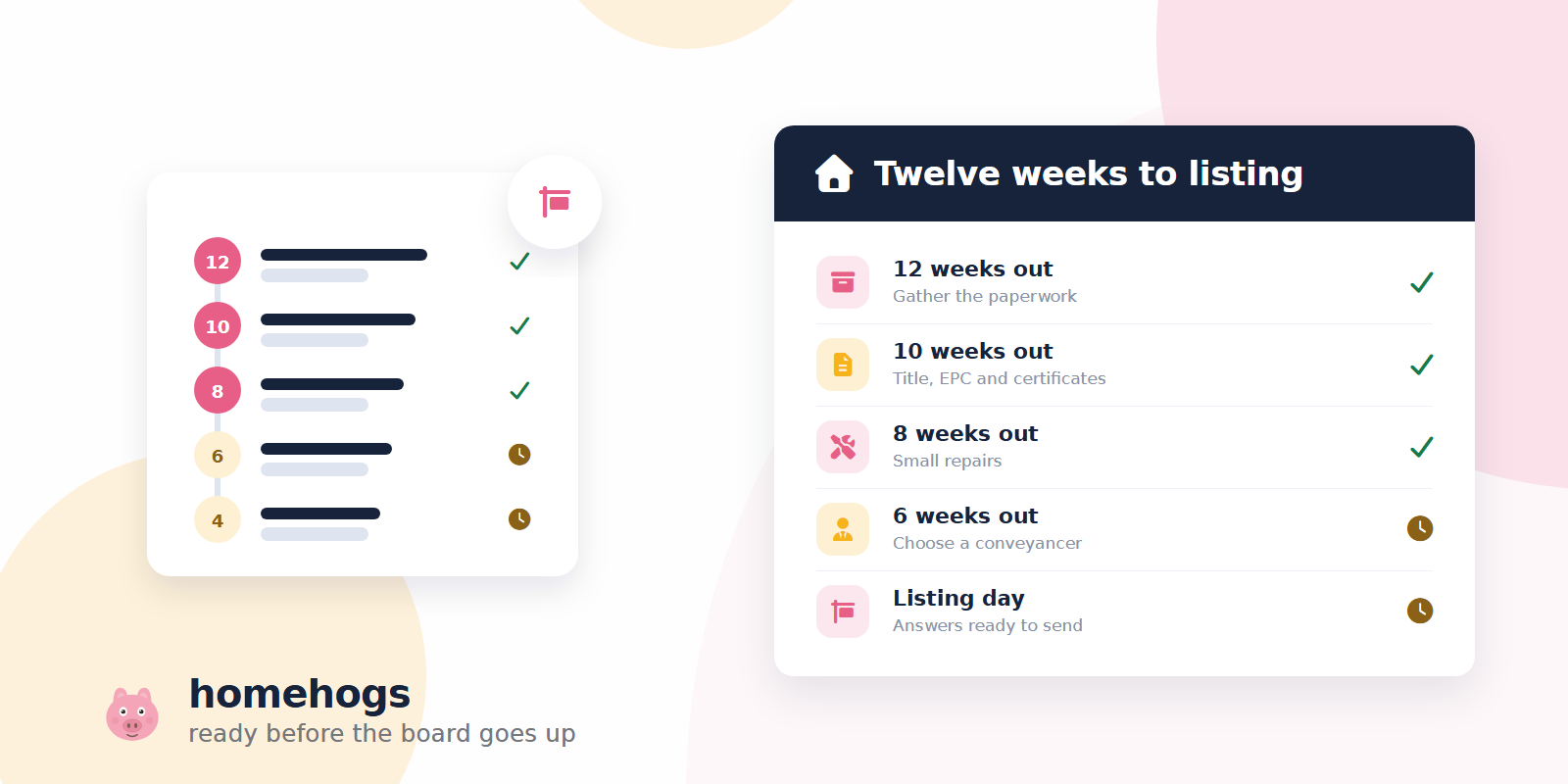
12 weeks out: gather the paperwork
- Find the pack from when you bought: the TA6 the last seller filled in, certificates, guarantees and manuals.
- Make one folder, paper or digital. List every piece of work done to the house with a rough date.
- Download the title register and plan from HM Land Registry for £7 each and check the names and boundaries look right.
- Look up your EPC on the register and note its expiry date.
- Leasehold: ask the managing agent what a management pack costs and how long it takes. Find your lease.
Our guide to what documents you need to sell a house lists every document, where it comes from and what to do if it's missing.
12 weeks out: know your numbers
- Ask your lender what you owe, whether there's an early repayment charge and what it costs to move the mortgage to your next home. GOV.UK suggests checking all three before you sell. Our guide to when your fixed rate ends explains how charges and deals work.
- Add up the costs of selling. Which?, using Reallymoving data from November 2025, puts a home mover's average estate agent bill at £4,615 and an EPC at £65. Add conveyancing, removals and anything still owed on the home.
- If the home hasn't been your main home the whole time you've owned it, check whether Capital Gains Tax applies.
10 weeks out: title, EPC and certificates
- Book an accredited assessor if the EPC has expired or the home has changed a lot since it was done. You must order one before the home is marketed.
- Match each piece of work on your list to its evidence: a planning decision, a building regulations completion certificate or a competent person certificate.
- Order replacements now. A FENSA window certificate is £30 online. Council building control records can take longer.
- Gather guarantees (damp, roofing, insulation, boiler) and the boiler's service history.
- Run our free sale-ready check to see which gaps are left.
8 weeks before: repairs, presentation and valuations
8 weeks out: small repairs
Buyers notice the small things and so do their surveyors. A short list now saves a long list of questions later.
- Fix dripping taps, tired sealant, sticking doors and windows, loose handles and blown bulbs.
- Clear gutters you can reach safely from the ground, or book someone who does it for a living.
- Get the boiler serviced if it's due. Keep the engineer's record with the others.
- Have any damp patch or crack looked at by a professional so the cause is dealt with. Keep the paperwork: the TA6 asks about it.
- Keep receipts and any guarantees for work you have done now.
Our guide to checking a tradesperson covers quotes, insurance and the scheme memberships that come with a certificate.
8 weeks out: presentation
- Declutter one room at a time and put away what you won't need before you move.
- Deep clean, including windows, the oven and grout.
- Tidy the front: bins out of sight, the path swept, the door and house number clean.
- Decide what's staying and what's going, because buyers ask at viewings and it ends up on the TA10 fittings and contents form.
8 weeks out: valuations
- Look up what similar homes nearby actually sold for with GOV.UK's house price search or our free house price calculator.
- Book valuations from at least three agents. Ask each one which recent sales their figure is based on.
- Treat the highest figure with care. An asking price well above the evidence can mean a long wait and a price cut later.
6 weeks before: choose a conveyancer and an agent
Choose a conveyancer
- Get quotes and check what's included, such as a leasehold supplement, ID checks and any fixed costs.
- Check they're regulated. Solicitors, licensed conveyancers and chartered legal executives can all do the work, as GOV.UK explains. The Law Society's Find a Solicitor and the Council for Licensed Conveyancers list them.
- Instruct them now. The Law Society encourages sellers to instruct a conveyancer as early as possible, ideally before marketing.
- Ask them to send the TA6, TA10 and any TA7 straight away and, for a leasehold home, to order the management pack.
- Expect an ID check. Have your passport or driving licence and proof of address ready.
Choose an estate agent
- Compare the fee and what it includes: photos, a floor plan, accompanied viewings, sales progression.
- Read the contract before you sign. GOV.UK warns that it's legally binding and that signing with more than one agent can mean paying two fees.
- Check the tie-in period and the notice needed to leave.
- Ask which redress scheme they belong to: The Property Ombudsman or the Property Redress Scheme.
- If they recommend a conveyancer or a mortgage broker, they must tell you about any referral fee. You don't have to use them.
- Expect the agent to check your identity before marketing. HMRC's guidance requires agents to verify sellers and, once an offer is accepted, buyers.
4 weeks to listing day: forms and the listing
4 weeks out: the forms
- Fill in the TA6, TA10 and any TA7 with your folder open beside you, not from memory. Our guide to the TA6 property information form explains what each part asks and how to answer well.
- Say "not known" where that's genuinely the answer. Tell your conveyancer about anything missing.
- Leasehold: chase the management pack. Foxtons puts the fee at £200 to £500 and the wait at up to six weeks. If your landlord asks for a leaseholder deed of certificate, GOV.UK says you get at least 8 weeks.
3 weeks out: the listing
- Give the agent accurate facts for the listing: tenure and any lease length, the council tax band, service charges and ground rent, utilities, broadband, parking and anything a buyer would want to know. Agents have a legal duty not to leave out material information a buyer needs.
- Read the draft listing and floor plan before it goes live and correct anything wrong.
- Book the photos for a bright day after the tidy-up.
2 weeks out: final checks
- EPC in hand and ordered before marketing begins.
- Forms drafted and certificates in one place, ready to go to the buyer's conveyancer.
- Plan how viewings will work: who shows people round, how much notice you need and where pets go.
Listing day
- The home is on the market with an accurate listing.
- Your answers are ready to send the day an offer is accepted.
- You know your lowest acceptable price and your moving timescale.
From listing to an accepted offer
- Viewings. Open curtains, lights on, windows aired. Let the agent show people round if you can: buyers ask more questions when the owner isn't hovering.
- Feedback. Ask the agent for every viewer's feedback. A pattern (the price, a smell, a dark room) tells you what to change.
- Offers. GOV.UK says your agent must pass on every offer right up to exchange. Ask about each buyer's position: are they in a chain, do they have a mortgage agreed in principle, have they sold?
- Accepting. An offer isn't legally binding in England and Wales until contracts are exchanged, so accepting one starts the legal work rather than ending the sale. The agent sends a memorandum of sale to both conveyancers.
- The buyer's checks. Once you accept, the agent must check the buyer's identity too.
From offer to completion
- Contract pack. Your conveyancer sends the draft contract, title, forms and certificates to the buyer's conveyancer.
- Searches and survey. The buyer's conveyancer orders the searches. The buyer's surveyor visits, so keep the home tidy and give access to the loft and the meters.
- Enquiries. The buyer's conveyancer sends questions. Answer quickly and from documents: this is where a sale stalls.
- Mortgage. Your conveyancer gets a redemption statement from your lender so the mortgage is cleared from the sale money.
- Completion date. Agree a date with the buyer and your own purchase, if you're in a chain.
- Exchange. Both sides sign and exchange contracts. From this point the sale is binding and pulling out normally means paying compensation.
- Before completion. Keep your buildings insurance in place: the Law Society's notes point out that a buyer's lender may not release funds if the home is damaged before completion. Book the removals, tell your suppliers and the council and remove everything that isn't included in the sale.
- Completion day. Take meter readings with photos, hand over the keys as agreed (usually through the agent) and wait for your conveyancer to confirm the money has arrived and the mortgage is paid off.
- Afterwards. If Capital Gains Tax is due on the sale, it must usually be reported and paid within 60 days.
What to keep and what to hand over
Hand the buyer what belongs with the house: keys and fobs, alarm codes, manuals, guarantees, the boiler's service history and the certificates for work done. Keep your own copies, plus:
- the TA6, TA10 and any TA7 as you signed them, because questions about an answer can come up after completion
- the contract and the completion statement, which show the price and every cost
- the redemption statement showing the mortgage paid off
- meter readings with photos from completion day
- purchase and improvement costs if Capital Gains Tax might apply
If you're buying next, start the new home's file on day one. homehogs keeps certificates, guarantees, manuals and service records attached to the room, appliance or job they belong to, with reminders before a service or guarantee runs out. When it's time to sell again, the Sale-Ready Property Record and the handover pack for the next owner are built from what's already there.
Scotland, Northern Ireland and Wales
- Scotland. The steps differ. Before the home goes on the market you must have a Home Report: a single survey with a valuation, a property questionnaire and an energy report. Trading standards guidance says it must be no more than 12 weeks old when the home is put on the market, so commission it near the end of your preparation rather than at the start. A Scottish solicitor or selling agent will explain the offers process.
- Northern Ireland. An EPC is needed when the home is marketed. The conveyancing process and forms differ from England and Wales, so ask a local solicitor early.
- Wales. The checklist applies as written: the same forms and land register as England.
Sources
- GOV.UK: Selling a home
- GOV.UK: Preparing to sell
- GOV.UK: Getting an estate agent
- GOV.UK: Finding a solicitor or conveyancer
- GOV.UK: Offers and negotiations
- GOV.UK: Energy Performance Certificates when selling
- GOV.UK: Search house prices
- GOV.UK: Search the land and property register
- GOV.UK: Estate and letting agency business guidance for money laundering supervision
- GOV.UK: Leaseholder deed of certificate FAQs
- GOV.UK: Tax when you sell your home
- The Law Society: TA6 Property information form (6th edition)
- The Law Society: TA6 explanatory notes
- legislation.gov.uk: Digital Markets, Competition and Consumers Act 2024, section 227
- FENSA: Find and order your FENSA certificate
- Which?: The cost of buying a house
- mygov.scot: Home Report
- nidirect: Energy Performance Certificates
Last fact-checked 5 October 2026.
Start the paperwork before the sign goes up
homehogs keeps your home's certificates, guarantees and service history in one place and shows what's still missing, so the documents a sale asks for are ready on listing day.
Start free