Selling a home in Great Britain takes around seven months and roughly one agreed sale in four collapses before it completes. Almost none of them collapse at the viewing. We have written the guide we wish every seller had and it is free.
The short version
- Selling takes around 216 days from listing to completion on average and about a quarter of agreed sales collapse first.
- Almost none of those collapses happen at the viewing. They happen in conveyancing, weeks later.
- The three things you actually control are the price, the presentation and how prepared you are.
- Our free guide covers all of it, including leasehold, probate, tenanted sales and the differences in Scotland, Wales and Northern Ireland.
- It arrives by email, it costs nothing and you do not need an account.
Sales do not fall apart where you think they do
Ask a seller what worries them and they will say viewings. Ask a conveyancer and they will say enquiries.
Survey findings and legal issues together account for around four in ten collapsed sales in 2026 industry data. What that looks like in practice is mundane: a buyer's solicitor asks for the building regulations certificate for the loft conversion, nobody can find it and the file sits still for a fortnight while somebody rings the council. Every unanswered enquiry is another round trip of a week or two and every extra week is another chance for a chain to break somewhere above you.
This is the part of selling nobody teaches. Agents talk about photographs and asking prices and both matter, but the deal is usually won or lost in a filing cabinet.
The three levers you control
You cannot control interest rates, the news, or the family two doors down listing a bigger garden the week you go on the market. You control three things.
Price decides whether buyers look at all. Rightmove's data is blunt about the cost of getting it wrong: well-priced homes average 32 days to find a buyer, overpriced ones 99.
Presentation decides whether the buyers who look fall for it. This is the cheapest lever and the one most often spent badly.
Preparedness decides whether the sale you agree actually completes. It is the least visible of the three and it is where most of the damage is done.
The guide is those three levers in detail, in the order you will meet them.
What is in the guide
Eighteen chapters, about 25,000 words, written for England and Wales with proper notes for Scotland and Northern Ireland:
- The decision: why you are moving, what moving costs, sell first or buy first and when to list.
- The paperwork: the documents that sell a house and the honest fixes when one has gone missing.
- Pricing: what the evidence says and the questions that sort good agents from smooth ones.
- How to sell: high street, online, hybrid, auction and quick-buyer routes compared, plus the contract terms worth two minutes of your attention.
- Presentation: where small money makes a real difference and why the energy story now sells houses.
- On the market: photos, floorplan and words, launch week and viewings that convert.
- Offers: qualifying every offer, negotiating without losing your buyer and the low valuation.
- The legal stage: your conveyancer, the forms, enquiries, searches, the survey and exchange.
- Completion day: how the day actually works, the moving checklist and the handover.
- The money chapter: the full bill, mortgage moves that save real money and capital gains tax in plain English.
- Special situations: leasehold, tenanted property, probate, separation, negative equity, shared ownership and rural realities.
- When things go wrong: fall-throughs, gazundering, chain breaks and how to complain formally.
- What is coming: the reform roadmap and why upfront information is about to change the timetable.
- Checklists and a jargon translator for every stage.
Start the boring parts early
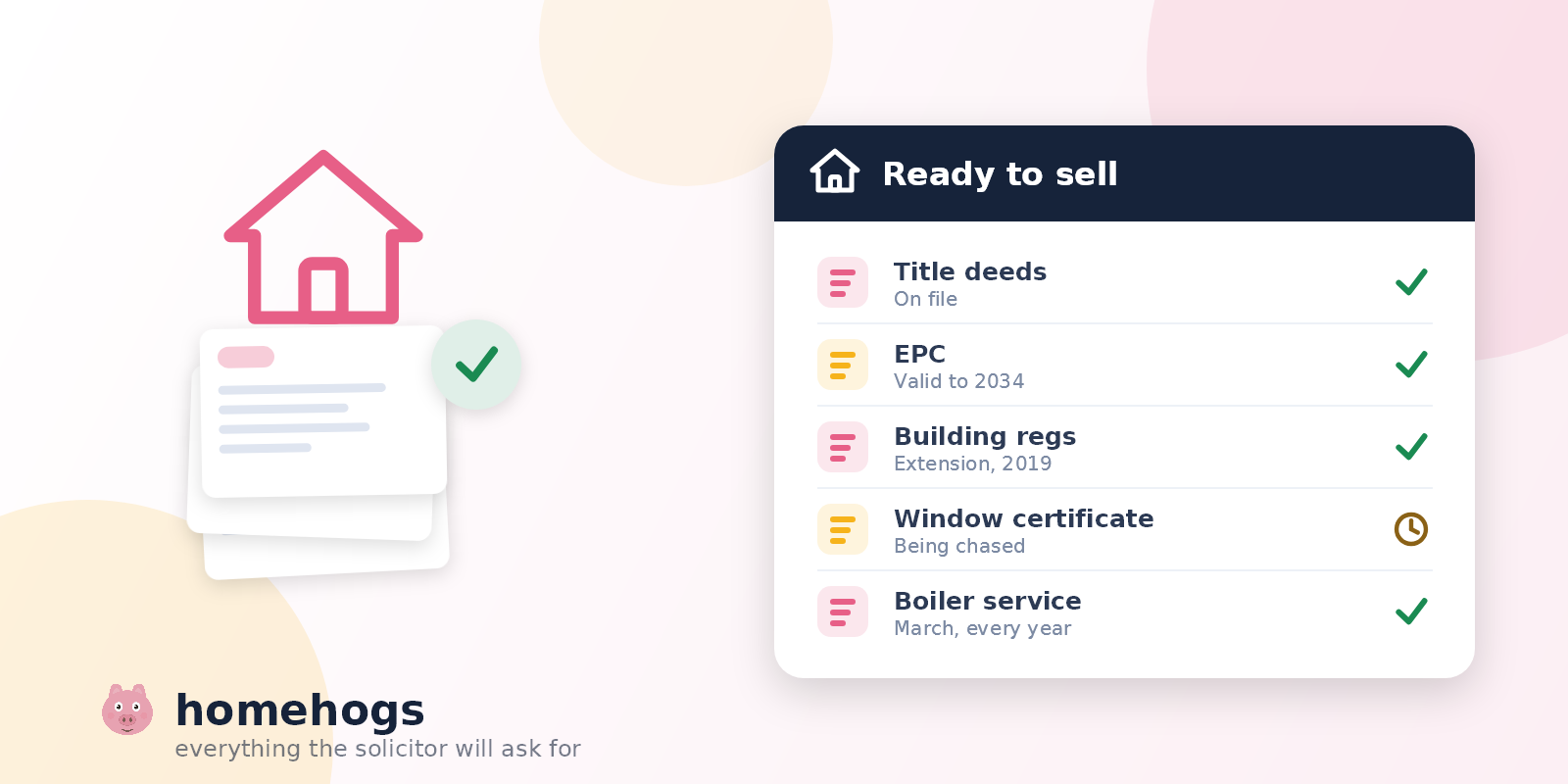
The single most useful thing in the guide is also the least exciting. Gather your paperwork months before you list: the title register and plan, the EPC, building regulations certificates, FENSA notices, electrical certificates, warranties with the installer details that make them claimable and the servicing history that shows a cared-for house.
Government analysis puts upfront information at around four weeks saved per transaction and roughly half the fall-through risk. Transactions running on complete digital data have exchanged in a fortnight. Every certificate you replace now is an enquiry round that never happens later.
That is also, more or less, what homehogs is for. If you would rather keep it all in one organised place that travels with the house when you sell, that is the product this guide came from. If you would rather use a drawer, use a drawer, but start filling it this month.
Keep your home's paperwork in one place
homehogs is your home's memory: documents, certificates, costs and jobs, organised and shareable. Sellers who have it answer enquiries in a day.
Join the waiting list